

How Cats are Killing Our Ecosystems

Invasive species are a serious problem for the environment. They are animals or plants that are not native to a certain area and can cause significant harm. Invasive species can negatively impact the environment, the economy, and even human health. One major issue is that they can wipe out native species by eating them, competing with them for food and water, or spreading diseases. This weakens ecosystems and can even cause some species to disappear permanently.

For example, domestic cats can become a problem. Even though they are common pets, they can cause serious harm when they are allowed to roam freely outside. Cats were originally brought to places like the United States by European settlers, so they are not native to these environments. When they roam or become feral, they hunt and kill local animals such as birds, small mammals, and reptiles. In fact, cats are responsible for killing millions of animals every year in the United States. This makes them one of the most harmful invasive predators, even though many people do not think of them that way.
Invasive species, including cats, are often spread by human activity. Through global trade, animals can attach themselves to goods or equipment and be transported to new areas without people even realizing it. Transportation also contributes to the problem, as ships, cargo containers, and vehicles can carry species into new environments. Once introduced, these species can multiply quickly, especially if there are no natural predators to control their population.
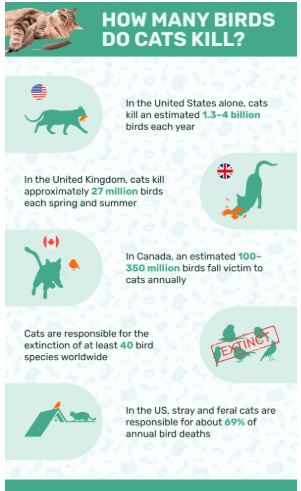
The problems caused by invasive species go beyond simply killing other animals. They can also change environments in ways that make it difficult for native species to survive, inducing competition. Invasive species often reproduce faster and use resources more efficiently, which creates competition and leads to declines in native populations. In addition, they can cause economic damage by harming crops, damaging infrastructure, and requiring costly management efforts.
The impact of domestic cats in specific shows how serious this issue has become. Even animals we consider harmless or with the simple label of "pet" can become a threat to the environment under certain conditions. In some cases, species have even gone extinct due to cat predation. For example, the Stephens Island Wren and Lord Howe Starling both were driven to extinction well over 100 years ago due to domestic cats. This highlights how it has been a long term issue as it isn't just a simple problem, however in the modern world, there are several ways to try to reduce the effects of the issue.
There are several ways to reduce the impact of invasive species. Prevention is the most effective method, which includes being more careful with trade, inspecting goods, and cleaning equipment. Other methods include biological control, such as using natural predators or diseases, and chemical control, like pesticides, although these must be used carefully. For domestic cats, one of the simplest and most effective solutions is to keep them indoors. Programs such as trap, neuter, and return can also help control feral cat populations over time, but they aren't very effective given the large scale issue domestic cats have become.

Overall, invasive species are a major issue that affects ecosystems, economies, and biodiversity. The example of domestic cats shows how human actions can unintentionally create environmental problems. While titled ‘'cats are killing our ecosystems,'' largely, we are to blame for the issues domestic cats cause. Because of this, it is important to focus on prevention, responsible behavior, and long-term solutions to protect native species and maintain healthy ecosystems.


Comments