

How Monster Builds Real Complexity Through Contrast

One of my favorite, if not favorite, psychological thriller stories I’ve come across is Naoki Urasawa’s Monster. The main story of Monster follows Dr. Tenma in post-Cold War Germany, the history and context of Germany in this period is crucial to understanding the story as well, but I am trying to avoid any big spoilers. But one of the reasons why Monster is so great is that it takes its time to full develop practically every character in the story, even minor characters are key to the themes that make up Monster. For a lot of modern media, being labeled “deep” usually comes down to how dark or shocking it can get. Stories rely on tragic backstories, disturbing scenes, or extreme violence to convince the audience that there is something meaningful underneath. However, Naoki Urasawa’s Monster strays from this norm. Instead of forcing complexity through shock, it builds it through contrast. This is what makes the story feel genuinely layered rather than artificially “deep,” and why it continues to stand out as a psychological thriller.

One of the clearest examples of this is the contrast between morality and hesitation, especially through the character of Dr. Tenma. At first glance, he represents a straightforward moral ideal as a practically ‘perfect’ doctor. He is strongly tied to his belief that all life is equal and worth saving. But the story does not leave that belief unchallenged. Even from the start, we see his hesitation and conflict when trying to decide whether he should prioritize this belief and save a child's life, or prioritize his career and save a politician’s life to get a promotion as ordered by the hospital director. This contrast between belief and action is what adds real depth. Instead of presenting morality as something fixed, Monster treats it as something that can be tested, bent, and questioned depending on the situation. That tension feels realistic because it reflects how people actually think rather than how stories usually simplify moral choices. At the same time, because of the decision he made during this conflict, one he thought was morally justified, in the long run this decision would set off a chain of events that cause an unbelievable amount of suffering. It created guilt within Dr. Tenma, who felt responsible for it even when he wasn't the one causing harm. So while Dr. Tenma has an extreme sense of superego in a way that almost seems unrealistic, it is balanced by this continued inner conflict and the fact this immovable sense of morality is a ‘flaw’ that drives the story, instead of him just being a flawless hero.
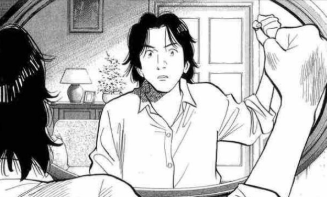
Another major contrast comes from the way the antagonist is presented in comparison to Dr. Tenma. Johan is not written as a typical villain who is simply “evil,” or only evil because of his dark past. On the surface, he is calm, controlled, and almost empty, which already separates him from louder, more expressive antagonists. At the same time, the story places him within environments that hint at how people can be shaped by their surroundings. What makes this effective is that it never fully reduces him to just his past. Instead of saying “this happened, so he became this,” the narrative leaves space for interpretation by the audience. This creates a tension between nature and nurture that the audience has to actively think about, rather than passively accept. Additionally, his belief that life is meaningless and subsequent exploitations and destruction that follow this belief directly contradicts Tenma's. And rather than being the ‘ego’ to opposite Tenma’s ‘superego,’ Johan is actually an embodiment of pure nihilism, practically void of being a human with the lack of true identity. But the two’s relationship is not one of clearly defined rivalry, in which the two unmovingly hate each other. Without getting into any spoilers, I merely wanted to mention it is just important to take into account this relationship before developing a fully rounded viewpoint of Monster.

The pacing of Monster also reinforces this idea of contrast. Unlike many thrillers that rely on constant action, it moves slowly and deliberately. Quiet conversations, small choices, and subtle character interactions carry just as much weight as major turning points. This balance between stillness and intensity forces the audience to engage more deeply with what is happening. Rather than being overwhelmed by nonstop events, viewers are given time to process the ethical questions and emotional stakes that define the story.
What ultimately separates Monster from other series is that it refuses to take what I would consider shortcuts through unimaginable and disturbing stories. While the story of Monster does contain quite a few shocking twists, that is not what keeps the reader intrigued and thinking. Instead, it builds complexity through opposites: good versus evil, action versus hesitation, innocence versus darkness, and control versus chaos.

Overall, Monster is a strong recommendation for anyone looking for a psychological thriller that actually creates a masterful depth. As someone who has read the manga and watched the show, I believe either form of media is great, as the show was adapted extremely faithfully to the manga. It is not a story that tries to impress through surface-level darkness, like simply having a shocking story, but one that develops complexity through careful writing and meaningful contrasts. Because of that, the story of Monster is less about what happens, and more about how and why it happens, which is what makes it worth watching or reading.


Comments